Category Archives: On Wisconsin

Gentlemen in the Rain, Women in the Sun

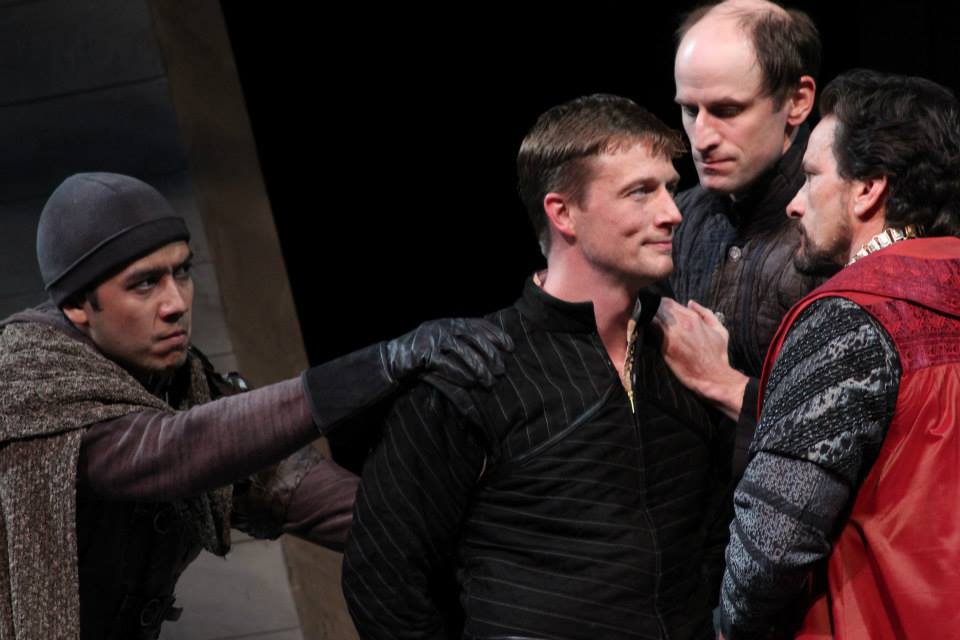
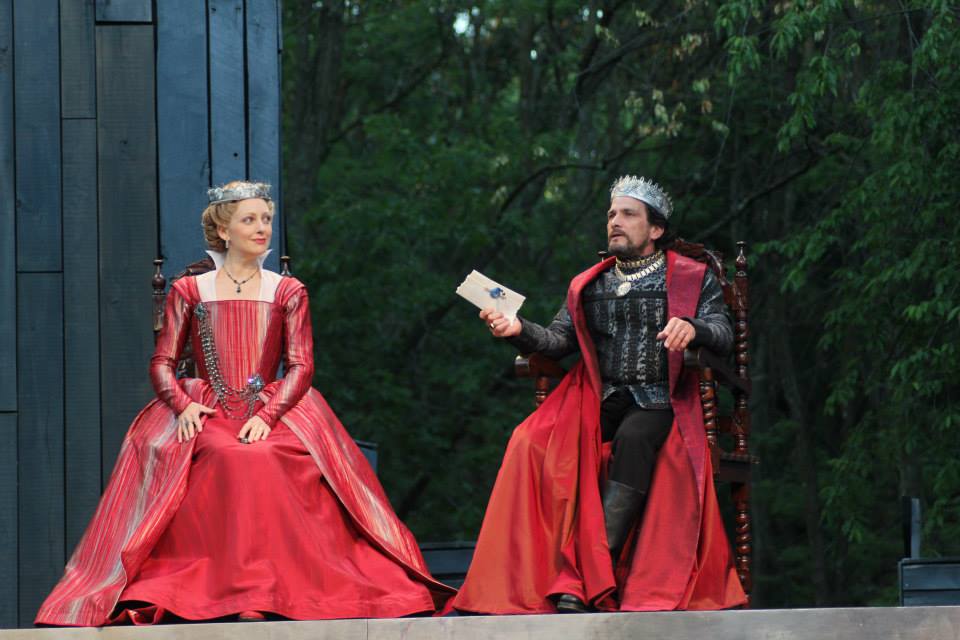
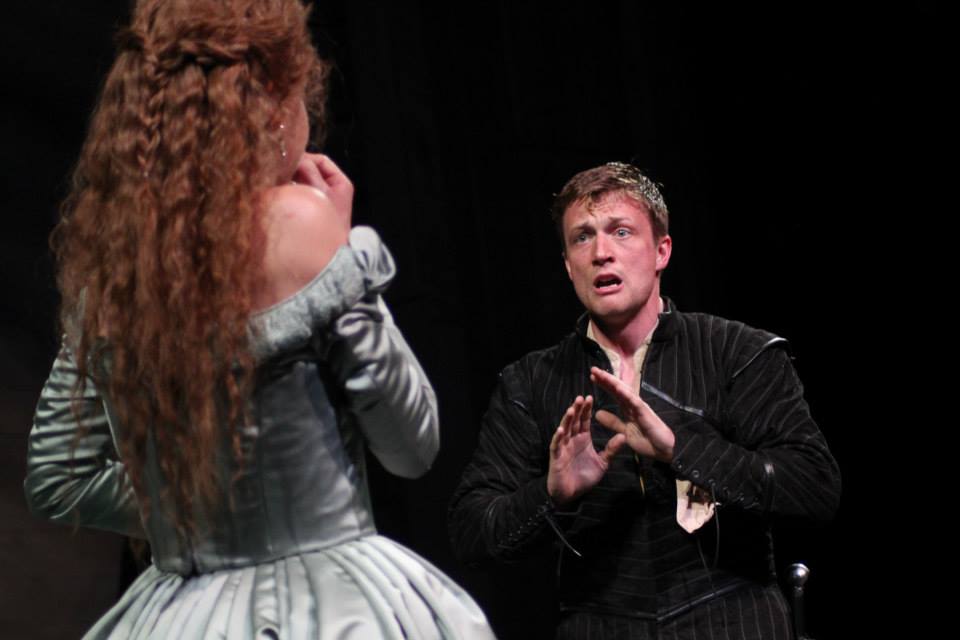
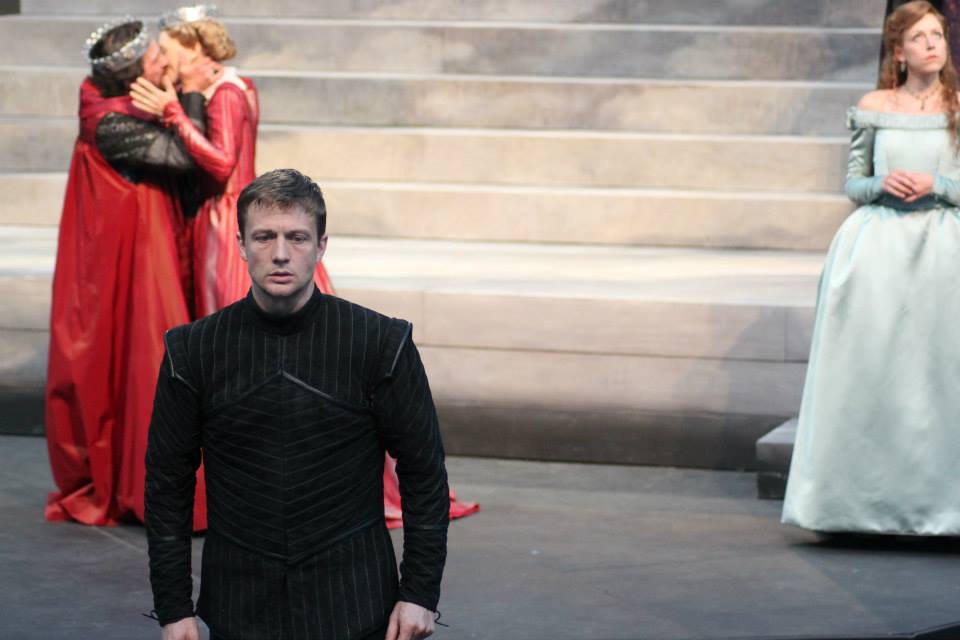
How fitting that a play highlighting Proteus
would play on a day with various weathers,
rainy and warm then steamy and warm then pouring and warm
then breezy and cool then cool and calm then warm and calm
with the sun changing clouds into haze and then,
when Sylvia crossed the threshold from backstage,
that moment, I would swear it, did the sun
come out, full on,  and turn her blonde hair into blazing
waves of light. I still can’t see, can’t comprehend
why Valentine forgives his awful friend,
why Sylvia forgives her Valentine
for giving her to an inconstant man.
The woman seeming pitiful I get.
The man offending everyone I get.
I choose to see the Bard as having gaps,
not my heart not my brain with this big lapse.

_____


Every Thursday this semester I’m trying to do at least one big thing that reminds me I’m teaching only two courses, and have been allowed the grace and space to spend 20 hours a week on my creativity research.


Waiting for Two Gentlemen of Verona to start this morning, I was able to touch base with one of the many wonderful folks at APT who do their work offstage—at some point this fall, I’ll be doing some interviews about creativity (and especially, ironically, when they try NOT to be creative).


But it was the play itself I was most focused on today.


After all—why research creativity without enjoying the fruits of creativity that my fine little town has to offer?


Nice job, everyone—very nice to see Marcus Truschinski in another leading role, and Travis Knight right there with him (and very fun watching the high school girls at the matinee get all swoony).  I think no one does fragility mixed with strength the way Susan Shunk does—it’s like glass and steel all curving around each other. Nice job, Steve Haggard as Launce, and Will Mobley as Speed, using their terrific comic timing to sharpen the focus of the students who were, for the MOST part, dealing admirably with the distractions of rain and wind and then bright sun and heat.


And I swear, the sun really did come out right at the moment Abbey Siegworth stepped onstage in her tower.


This isn’t my favorite Shakespeare play by any stretch, but I’ve seen APT do it well two times now, and seeing it today gave me fond and bittersweet memories of the last time.  Then, it seemed to me and my friend Lee (may she rest in peace), the director emphasized every possible bit of homo-eroticism in the play (which made Valentine’s actions a little more understandable, if he’s as in love with Proteus as Julia is)

“That was hot,” Lee said to me when we chatted in the aisle right after a performance one night. As I remember it, I could only nod yes.

*


WTF Wisconsin

Well, o.k., I’ll admit it. I haven’t gotten too riled up about the Solidarity Singers getting arrested.  Sorry.

I mean–I did mention it at my 30th high school reunion over the weekend, that they were arresting old people in my state, but I’m pretty sure I shrugged my shoulders at some point each time I mentioned it.

Partly it’s me tending my own emotional acre–I’ve sort of made a rule for myself, in an ongoing attempt to be more sane, that if I don’t have time to DO SOMETHING about a particular issue, I can give myself a free pass not reading about it/getting worked up about it.

(NOTE: I see this disengagement as a temporary state. When I feel healthier, when I feel as though my own emotional acre is well-tended, I will peek farther again. When I have maintained my house for a few months of NOT feeling as though I were half a matchbook collection away from being an episode of Hoarders, I will re-engage.  Hell–maybe I’m there now, because….)

Wow am I pissed about Matt Rothschild getting arrested today.

It’s not that I was ever against the Solidarity Singers. I sang with them a couple times. I was proud to sing with them standing next to Margaret Rozga, now famous for speaking truth to power at  an MLK, Jr. event.

I think maybe I was just tired of protest. Spring 2011, Wisconsin’s Arab-esque spring, was wonderful and horrible. I took my son to march–he made a sign that had pictures of cats on it that said, “Hey Hey Meow Meow Walker Talk to Unions Now.”

I overcame my one bit of introversion–I don’t like to knock on people’s doors to ask them about politics (or Jesus, for that matter)–and gathered some signatures for the Recall.

But when the Recall failed, I just felt politically wiped out.  Tom Barrett? Really? Seems like a nice guy, but really? That’s all we could muster on behalf of half a million signatures?

So like a lot of other people, I’ve just hunkered down & tried to do my job and love my family and maybe just maybe work on de-cluttering my house in case I decide there’s a state I can move to where all this won’t happen. (Where is that? Vermont?)

And at first, when the not-cool, not Tubbs-cops, started arresting singers, I will admit that I was thinking “just apply for a permit already.” But here’s the thing. I really think if there were a group of people showing up every day at noon to sing songs in praise of Scott Walker, the Wisconsin Department of Administration would never have made the policy about requiring permits in the first place.

And after a few weeks of this, I’ve decided I agree–this is political speech set to music. If we have freedom of speech, if we want to honor the proud Wisconsin tradition of honoring dissent, then permits shouldn’t be required for protests in the Capitol Rotunda.

I’ll admit one other thing–I’ve been wondering if all my liberal friends who are outraged about this would be equally supportive if a pro-life protesters were to go to the Capitol (if we ever have a pro-choice governor again), and sing “Jesus Loves the Little Children” and hold up signs of dead babies. (That may not be equivalent, but it would all fall under the category of political speech, and now that I’m getting worked up, I’ll just go ahead and throw my wondering out there.)

But today–arresting a journalist for observing and calling it “obstruction?” I’m so angry and scared I can’t muster disengagement.

And yet, I don’t know what to do. Go to the Capitol and observe? Protest? Sing? Get arrested? I really don’t have time. I would totally have a panic attack. And what would that help?

I don’t know what to do, but I know what I need. Or at least what I wish for.

1. Examples of liberals supporting conservative speech at the Capitol, especially that which made them feel icky.

2. Famous people to come and sing and get arrested. Lots of folks are tweeting in support. That’s pretty much nothing. Even I’m doing that.

3. Famous journalists to come and observe and get arrested. I mean–I know who Matthew Rothschild is, but more people know who Jon Stewart is.  Isn’t that sabbatical of his about over?

4. I really need someone amazing to run against Walker in 2014. I don’t know if he could do it, but I’m most excited about Mahlon Mitchell.

5. Mostly I need someone to tell me what I might do to make any of this better. (I’ll ask Dale Schultz next time I see him in Richland Center.) Other than just being pissed and scared and feeling icky, I mean. Because I’m already doing that.


_____

Update:  a friend reminds me that when Doyle was governor, pro-life protestors were on the square frequently, and we’re assuming they didn’t have to get a permit.

APT’s Hamlet is Awesome. Go See It.

Q: How’s Hamlet?

rgbackdrop

The short answer, for American Players Theatre’s 2013 production is that it’s terrific and I’m still processing how terrific it is.

It took me to my APT happy place numerous times on Sunday night (a very muggy-buggy night), by which I mean I forgot I was watching a play, forgot I knew the actor playing the part, forgot I was anywhere but in the moment on the stage.

Part of me wants to stop there–to say, simply, it was great. Everyone who can get here should get here and see it.

Except this Hamlet was so freakingly brilliant–I thought about it for hours after I got home, and I’ve thought about it all day.

So at the risk of revealing my theatrical and Shakespearean ignorance (the vastness of which undiscovered country has not been mapped), here are some of those thoughts.
____

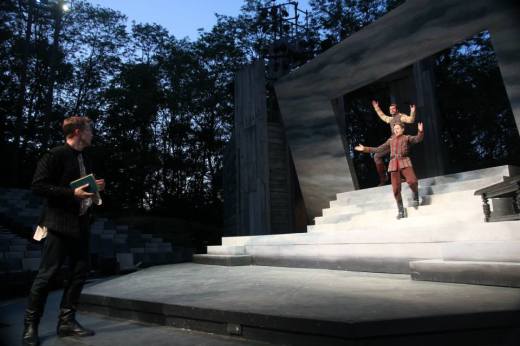
I really think John Langs, the director, is brilliant. I know a theater production is a collaborative process, so my appreciation of the unnerving, stark, gorgeous, imposing, spare set goes to Takeshi Kata and Andrew Boyce. And the way the lighting shows two Hamlets–his posture saying one thing, his face saying another?  Credit for that goes to Michael A. Peterson.

The shadow seems much surer of itself here.

The shadow seems much surer of itself here.

But over and over, each component worked with every other component. The costumes worked with the set. And the set worked with the lighting. And the lighting emphasized the performances. And the performances were awesome. That’s to the director’s credit.

And having James Pickering–a really well-known Milwaukee actor who’s never appeared on the APT stage before–play the ghost and the player who plays the king parts and the gravedigger–that’s not just a casting idea. That’s an interpretive idea.

It made it seem like the ghost was showing up ALL THE TIME.

The child longing for the nuclear family that no longer exists.

The child longing for the nuclear family that no longer exists.

I know directors pluck from other performances (and there are a lot of Shakespeare casting traditions that would be utterly lost on me–I mean, I know about Cordelia/the fool, but that’s about it), and I know Langs directed Darragh Kennan in Hamlet in Seattle pretty recently, so I don’t know if this is the FIRST Hamlet to do that with the ghost/player/gravedigger, and I don’t know if the ghost has shown up other times when he doesn’t have lines, as he does in this performance (I won’t say where-all, because at least one of them seemed like a big risk with a big payoff), but it all went beyond “interpretive idea,” actually. It felt like vision. Genuine artistic vision.
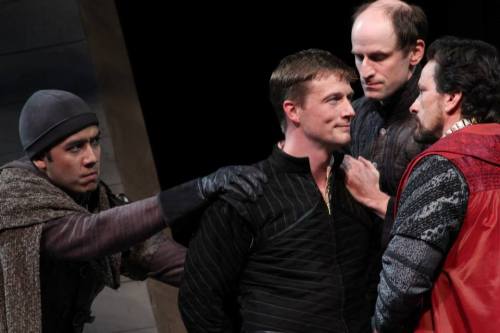
What a counterpoint to Bassanio and Antonio from Merchant of Venice.

What a counterpoint to Bassanio and Antonio from Merchant of Venice.

Casting at APT is a complicated thing–eight plays done in repertory, core company and guest artist needs and contributions considered (who had a huge part last year, who had only supporting roles, who has one huge role this year and needs other supporting roles, who has reliable chemistry with who else)–so I can’t attribute the genius casting of this production of Hamlet to John Langs alone. Whoever had a hand in it, though–bravo.

If I’d been asked, prior to seeing this performance, to list Shakespeare’s really nasty kings, I’d have said Richard and Richard and then changed the subject, since I don’t know the histories as well as I ought. I might not have thought of Claudius at all. It’s not what I would typically think of as a meaty part.

But in Jim DeVita’s hands? Well, I hear Jim’s a fine cook, so I could say it’s like carving a chicken and understanding there’s good meat to be found places other than the drumstick and breast. Anyway, he found the meat. And chewed it up.

I mean, wow. When he says, of Fortinbras, “Holding a weak supposal of our worth,/ Or thinking by our late dear brother’s death / Our state to be disjoint and out of frame,” the delivery was so powerful I found myself wondering if Langs had somehow let Claudius deliver one of Hamlet’s speeches. (He didn’t. At least that one’s not Hamlet’s.)

“I like him not,” he says of Hamlet. And you think, “uh oh.”

I don’t mean Jim was upstaging or scene-stealing or anything bad. He just made it so clear how powerful Claudius was. How mean.

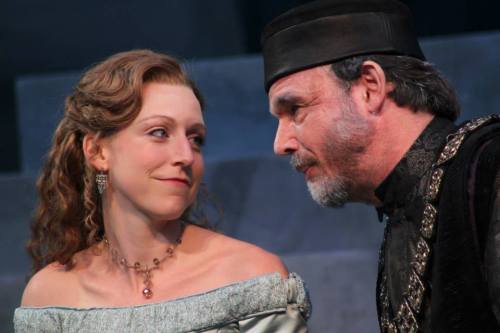
And unlike some productions, which maybe emphasize the Oedipal-incestuous-icky embraces between Hamlet and his Mom because no one can possibly imagine her really being turned on by whatever Claudius they’ve cast (the pompous guy in the Slings and Arrows production comes to mind, Season Two, Episode One, not the first season’s Claudius), De Vita and Staples have awesome onstage chemistry. One review found it “puzzling” why they were “hanging all over each other.” It didn’t puzzle me at all. Wouldn’t you, on him, were you she? And wouldn’t you, her, were you he? I, me, we would, methinks.

Gert and Claud

Gert and Claud

And then of course there’s Hamlet his own self.

Bravo, Matt Schwader. Bravo.

Mike Fischer’s review gets it right, that Matt’s “intensity adds bite and even menace to Hamlet’s encounters.” He calls him “white-hot,” and says he “handles Shakespeare’s verse as well as anyone at APT.” Yes, and yes, and yes.

I am enjoying reading and re-reading about Matt’s Hamlet process in his blog, “Bounded in a Nutshell.”

(He’s not just pretty. He’s also thinky.)

Matt’s explanation of his process helps explain one of the things that amazed me last night: the BIG ASS SPEECHES melded into the play so smoothly. They weren’t under-played, and not muted, but at no point did the production feel like this:

Druuuuuuuuummmmmmmroll: SOLILOQUY. (more stuff, more stuff, more stuff) and then
Druuuuuuummmmmroll: SOLILOQUY.

For example, leading up to the most famous of the BIG ASS SPEECHES, the “to be or not to be” one, because David Daniel’s Polonius is so strong, and Jim De Vita’s Claudius is so strong, and Christina Panfilio’s Ophelia is so strong, I found myself focused on what THEY were doing. Especially Ophelia. (I’ve never felt so pissed at Shakespeare for killing someone off as this Ophelia. She had spunk, damn it.)
Lou Grant to Mary Richards: "You've got spunk. I hate spunk."

Lou Grant to Mary Richards: “You’ve got spunk. I hate spunk.”

So when Matt came onstage and began speaking, to the audience, it took me a beat or two to realize that what he was saying was one of those speeches, even though I’d known what was coming.

In terms of speaking to the audience, as he was, part of the time, in this speech, Matt has this to say, “I’ve found that it is simply much more dramatic and engaging to watch an actor speak with another person (or group of persons, as is the case with direct address), than to be muttering to his or herself. Tremendous drama lives in the unexpected. What unexpected thing can happen to a person talking to his or her self? Not much. On the other hand, talking with an audience opens a flood of possibilities as to what might happen.”

The unexpected here is that Ophelia is listening, and she startles Hamlet, which was startling. In a good way. Because then the “get thee to a nunnery” lines seem startling, even though I knew they were coming.

Hamlet and Ophelia.

Hamlet and Ophelia.

_____

Matt did a fantastic job, which wasn’t startling. Anyone who’s watched him the last few years knew this was coming, that he’d earned it & that he could do it.

But what was startling overall was how his performance seemed utterly in service of the play.

I don’t mean I expected Matt to be selfish or show boaty. I’m just used to thinking of Hamlet as a vehicle for Hamlet (the character and the actor who plays him). This didn’t feel vehicular at all.

What a great play.
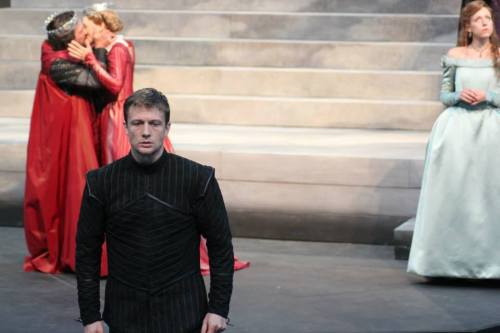
Another fantastic shot from Carissa Dixon

Another fantastic shot from Carissa Dixon

_____
(All these awesome images of the production are used with permission from the awesome Carissa Dixon.)

If God’s going to all the trouble of sending a tornado after you….

When I was little, I wasn’t scared of tornadoes.

My Dad always said, “If God’s going to go to all the trouble of sending a tornado after you…” and I actually don’t remember the exact words of what came after that, but the idea was, just give up. If God wants you to die in a tornado and you survive that tornado, he’ll send another tornado. Or a car wreck. Or a brown recluse spider.

I found that profoundly comforting when I was a child and beyond, but I’m sure my Dad’s calm helped, too. (Note to self: try not to freak out ENTIRELY as you’re fleeing your own home, your child in tow, to your parents’ basement across town. When I said, “Get in the car right now!” I’m pretty sure I had the same intonation & volume as “You can’t handle the truth!”)

Back in the 70s, there were watches and warnings pretty much all the time, it seemed, from March through September. We ignored watches entirely, and only grew concerned about warnings if the sky turned green.

Dad and I used to stand in our garage and watch sheets of rain come across the open field northeast of our house. He was probably smoking a pipe. I was probably petting Wooly and Daisy (the best dogs ever in the history of the world).

Regardless.

I now note several problems with Dad’s tornado wisdom.

1. Even if my belief in God had not changed, OH MY GOD. Really? I’m a good Baptist girl and God might just, out of pretty much fucking nowhere, send a tornado to kill me? And I can’t get away no matter what?

2. My belief in God has changed. I have a kind of wacked-out sort of X-Files Mulder/Scully hybrid of beliefs. As in:
a. I want to believe.
b. Maybe God could steer tornadoes in a pinch, but tends not to.

3. The basically impossibly huge question of how a loving God could allow horrible things to happen. (I’m not going to solve that here. Sorry if you’re disappointed.)

When I lived in the second of a series of three trailers I called home as a graduate student at Southern Illinois University, I began to have a recurring nightmare about tornadoes. In it, I would wake up in the middle of a horrible storm, feel the trailer begin to shake, watch the walls suck inward, watch the roof blow away, and then try to hold onto my bed to keep from getting sucked into the sky. Then I would wake up.

I suspect this had to do with being in miscellaneous precarious emotional situations in those years. And also living in a trailer. “God’s bowling alleys,” my brother always called trailer parks.

(So, o.k. What is it with men in my family and tornadoes?)

But during one actual tornado warning, I stayed in Trailer #1 and announced to God, “I’ll just die here with my cats, thank you.” Very green sky. Large branches flying by the window. Trailer rocking in real life, not the dream world. (Oh, that girl. I could just smack my 21-year-old self!)

I think, over the years, I’ve just grown less and less fatalistic. Certainly less suicidal! It is also possible my frontal lobe has developed some.

And then having a husband I love and I son I am OVER THE MOON ABOUT makes storms really stressful.

We’ve had a wacky weather week in Wisconsin. More storms coming.

Is it possible, in what I now called the land of “Zen Baptist” on my faith journey, to take wise precautions and yet be at peace about whatever comes?

Sure hope so.

Because what comforted me as a child, comforts me not at all right now.

_____
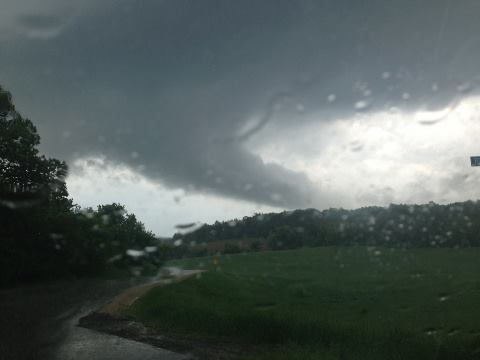
Here’s what fun about social media. Someone named Kevin posted this on Channel 3000’s Facebook page. The comments are hilarious. Including: “it’s sunny in beloit” and a whole thread of “don’t take pictures while you’re driving” and “it’s not a tornado.”

So. Probably not a tornado. (No one actually said it was.) And also not my picture. But gracious. I wouldn’t mind some boring weather.

Not a tornado.

Not a tornado.

Driving in a David Cates Novel

“O beautiful, for spacious skies
But now those skies are threatening”
“The End of the Innocence”

Taking the secret detour, the one the natives use,
I fly down Highway T to Z,
past the Cates family farm but really,
it’s the dips and swales and curves
and hills and valleys and long slopes up
and ridge roads that feel impossibly high
for Wisconsin that let me know I’m in a zone
where fiction could happen and also perhaps
some magic but for me, partly panic–

I get agoraphobic on some of these rises
where all you can see past the crest
is the sky. It reminds me of Eastern Montana
a little (except for more trees on both sides),
where I once drove up a long brown hill for so long,
for an hour, forever, I stopped believing in Canada.
I couldn’t imagine anything north of where I was.
Nothing but a sheer drop-off to Hell, maybe,
over the top, nothingness, a crevasse, the crimp-
edge of the known world, no ditch, just–

The trip up, the torture, doesn’t last that long here.
Just when I’m wanting to pull over,
figure out how to turn around or back up,
which is impossible–the road’s too narrow,
the curve’s too sharp, the hill’s too steep–
well, there we are, around the bend
finally, a stretch of open road, another red barn.

Another falling-down house tucked in behind
a mess of blooming lilacs, under which,
if this really is a David Cates novel, someone’s having sex
RIGHT THIS MOMENT, and probably with someone they shouldn’t.

And later the woman, or maybe she’s a girl,
would take a dandelion and say “make a wish”
as she blew the white seeds everywhere at which point
the man, or maybe he’s still a boy,
would think “tampopo” but not say it, not wanting
the girl to feel bad for not knowing Japanese,
and he might also think, but not say,
some racy, clever thing using the word “blow.”
What he probably would say would be “Great.
Now there are more weeds everywhere,”
but then regret having said anything at all.

Because you have to remember, the moment you think
“Anything can happen,” that something bad could.

Just because it’s almost June and everything’s green,
every shade of green, just because the blue sky
is paint-chip sky-blue right overhead, even when
you’ve got Don Henley cranked on the radio,
you can glance in your rear view mirror and see
how the bright blue turns to pale blue and then haze
and then gray along the horizon.

You can see farms you can’t get to on Highway Z.
The people who live there are happy or sad.
But you’ll never get there. You’ll never know.

Coming home, you’ll stop at the T of Highway T and 23
and you’ll see Frank Lloyd Wright’s wind mill
and it won’t impress you this time. Not at all.
_____

I left Southern Illinois to go to graduate school in Missoula, Montana, and there met David Cates, who’d come from Spring Green, Wisconsin, where I live now.

Freaky.

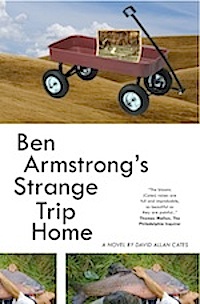
His latest book is odd and beautiful and haunting and two trips to Dodgeville recently I really have felt as though I entered some sort of parallel universe. If you read the book now, there’s probably a silver station wagon taking a curve a little too fast. I’ll be waving.

The latest novel by David Cates (wonderful to read, odd to drive in)

The latest novel by David Cates (wonderful to read, odd to drive in)

Hamlet’s Back at Devil’s Lake

The actor playing him this summer’s there,
I mean to say. He likes to memorize
while hiking, where the purple quartzite shines
and the T-Rex headed vultures soar.
The rock he’s on is so much older than
the play he’s in. They’re metamorphic mirrors–
hard things from Shakespeare and tectonic shifting–
still shiny, still showing us us after years
and years, hundreds, and millions, a billion years.
It is time and timelessness. And time is time,
not out of joint, not yet, still gracious here.

He is morphing, but the actor is still Matt,
and this Prince of Denmark loves his dog.

(If only poor Ophelia’d had a cat.)

_____
Oh! I can’t wait to see Hamlet this summer–great fun to be had and heartache to be felt and always, always interesting to see a new actor take on the old speeches and give them to us new.

Which reminds me–I need to get all my tickets figured out! To the box office with me, anon!

If you haven’t already made your own plans, you really oughta go to American Players Theatre.

_____

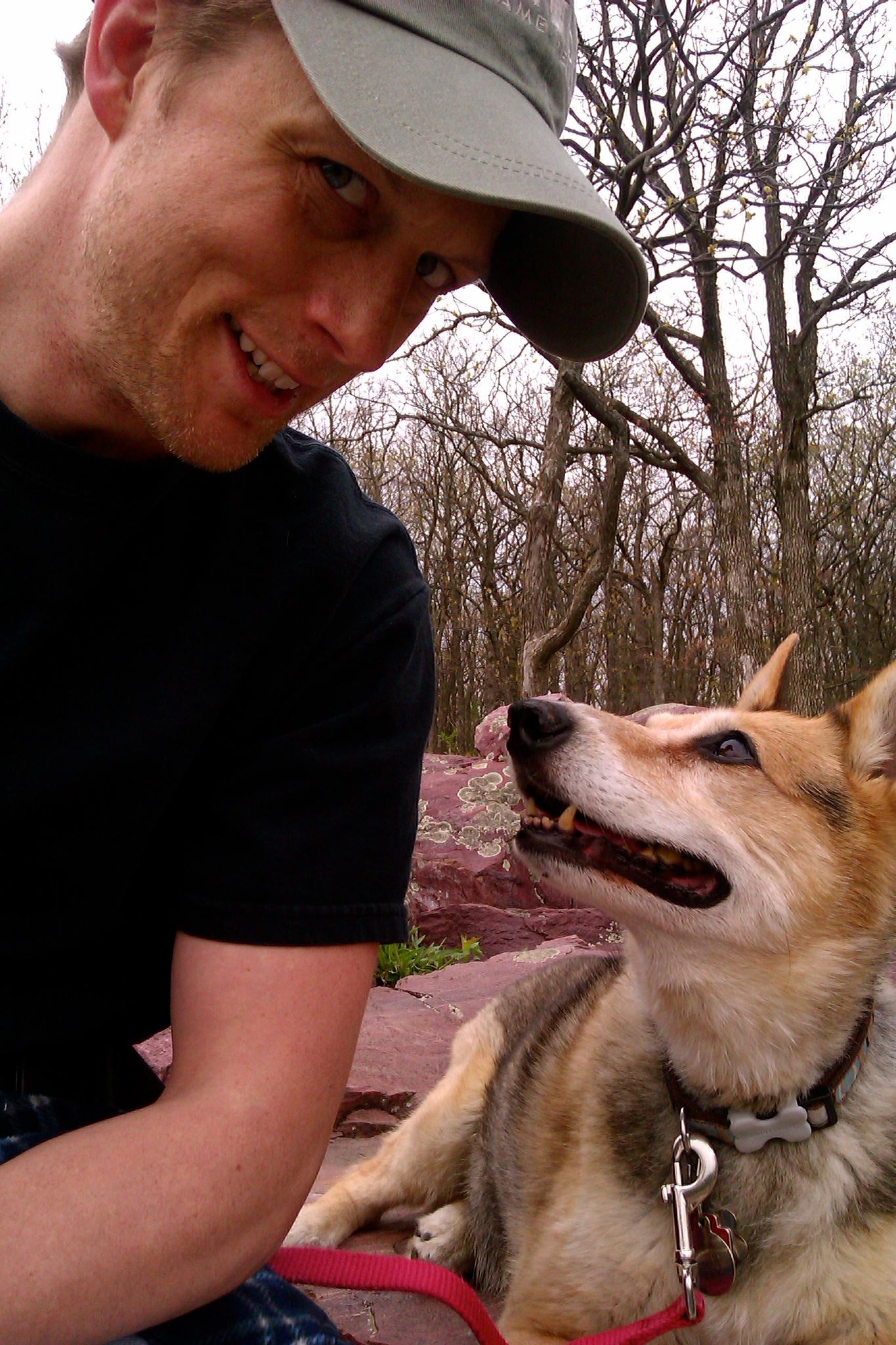
(Apologies for the sprung rhyme scheme above. Once I’d thought of “If only poor Ophelia’d had a cat,” I couldn’t let it go. Fortunately “cat” rhymes with “Matt.” But “dog” is just hanging out there, not rhyming with anything. Yet. I might revise. In any case, I know Matt will take care of his dog. And dogs mostly don’t care about rhymes. Thanks, Matt, for letting me share the pics–especially the puppy one. How could anyone look at that picture and not smile?)

____
462639_10151595624175155_1127254500_o

Matt Schwader, appearing this summer in Hamlet.

Matt Schwader, appearing this summer in Hamlet.

When Good Things Happen to Good People, #1

Here’s something that’s true: Ecclesiastes 9:11 “Again I saw that under the sun the race is not to the swift, nor the battle to the strong, nor bread to the wise, nor riches to the intelligent, nor favour to the skilful; but time and chance happen to them all.”

Another true way of saying that true thing: there are lots of things that suck all over, all the time.

But here’s what’s also true:

Sometimes really great people have really great moments, and I’m totally in the mood to celebrate some of those.

[Biblically, we can move from Ecclesiastes, pretty much my favorite book in the Bible, to one of the epistles of the apostle Paul (I like to say it that way because about half the time, in my head, when I say it, it comes out the apostles of the epistle Paul). I have issues with Paul, sure. Or should I say, ISSUES. But he had his moments, such as Romans 12: 15 “Rejoice with those who rejoice, weep with those who weep.” We’ll get to the weeping some other time.]

Ryan Martin teaches & researches at UW-Green Bay. I’ve hung out with him some at events focused on the Scholarship of Teaching and Learning. He’s fun to watch on various social media outlets. And he’s a great blogger. Recently he got to have one of those moments academics dream of, a good meal with an important scholar.

[That’s one vision of Heaven, for academics, that I’m sure would feel like Hell to others, but wow–what if we could have good food and meaningful conversations with people we’ve read for years? Ah….]

I was so happy to read about Ryan’s meal with Dr. Albert Bandura (I recognized the name!) & very interested to read a “5 Things I Learned (or was reminded of) During My Dinner with Dr. Albert Bandura.”

Ryan says Bandura is “doing important work that changes the lives of people across the globe.”

You know what? Bandura isn’t the only one.

Cute pic, even with Ryan's zombie eyes. And hey! Billie Holiday was there, too!

Cute pic, even with Ryan’s zombie eyes. And hey! Billie Holiday was there, too!

Pedagogy Stew #2

The following can be found in the February 2013 Voice of the River Valley.  The March edition is available online in the archives (I will post it when the April edition comes out).

I appreciate everyone’s feedback on the column when I’m out and about–glad to know it’s hitting the spot (at least for some folks!)

Any requests? I’m about done with the April column, but what should I write about next?

[And here’s a curious thing–I’ve just now realized I mentioned my bad handwriting in February’s column AND March’s. Both in the context of teaching–this time in terms of writing on the board, in March in context of commenting on student papers. So, two things:  I should perhaps re-read previous columns right before I send off the brand new ones, and 2)perhaps I need to write a whole blog post on the handwriting thing. Apparently it’s heavy on my mind.]

_____

Even though most college faculty no longer see themselves as “the sage on the stage,”

Look! A sage on the stage!

Look! A sage on the stage!

lecturing for full class periods, filling up the empty vessels of our students’ minds, the lecture-style classrooms we teach in are typically set up for someone to come in, and, sage-like, to stand at the front of the room and begin talking to students who sit with their desks facing forward. Now that a lot of us rely on PowerPoint slides for lectures (I like them because they keep me on track, and students can read them, unlike my handwriting, which is largely illegible—worst grade I ever got was a C in fourth grade for penmanship), even when we can move the desks around, we don’t, because we want students to keep their eyes on the slides.

I realized how attached I was to what I saw as the “default” setup for the basic humanities/social science college classroom last fall, when a fellow professor regularly had her students sitting in a circle—and often left the chairs in a circle when they left. I was annoyed at having to rearrange chairs, but I tried not to grumble—after all, “fusty don” is not the teaching persona I’m going for. (I do have students work in small groups in the course of most class periods, and 200-level classes more often have discussions in which they sit in a circle.)
I think my time volunteering at my son’s school makes me highly conscious of these matters. In a chapter from a book called Learning Spaces, Nancy Van Note Chism points out that “[s]pace can have a powerful impact on learning; we cannot overlook space in our attempts to accomplish our goals.” The teachers at the River Valley Elementary Studio School make an ongoing effort to support learning by shaping the space.
A couple of Saturdays ago, I went in to help one of the kindergarten teachers begin work on an igloo made of milk jugs. What lucky students! Lessons in physical science, social science, math, environmental conservation, creativity—all right there in their room in a way they can see and touch. My son’s teacher, that same Saturday, was rearranging furniture she’d brought in so that their classroom now has a living room. On a recent morning she met with students individually on the sofa, to go over their most recent reading test scores (while I worked with the rest of the class as they did individualized literacy work). In the afternoons, students read to themselves in the living room if they want.
Van Note Chism finishes her piece with this quote: “No longer can we assume that any old furniture and any old room arrangement will do—we know better. Like all academicians, we should ensure that current knowledge informs practice.” For a variety of reasons, professors tend to tolerate “any old,” but we could learn a lot from the emphasis K-12 teachers place on space.
—–
(Picture from flickr, Creative Commons. Tulane Public Relations, “student in class.”)

On the Enduring Appeal of Bureaucracy

A roller coaster isn’t scary because
The car’s attached to the rail (you hope it is),
However high you loop, you’re certain you will
End up right where you started. A reliable thrill.
A blanket. Mowed trails. Molded cafeteria tray.
We do it this way because we’ve always done it this way.
And if you want to make a radical change,
We’ll say no. Quickly. Firmly. Again and again.
“So rather than shift to what it needed to do,
The Army would continue doing what it knew
How to do, which is how bureaucracies act
When they lack strong leadership.” Thomas E. Ricks.
Of course it worked so well in Vietnam.
So we do what we do and thus stay safe and warm.

_____

Cafeteria trays at the Googleplex

Cafeteria trays at the Googleplex

The cafeteria tray I had in mind was the kind that has spaces for your food–elementary school tray, of course. But aren’t these Googleplex trays pretty? Gosh. Might make you think it was possible to have a mix of the creative and the tried-and-true.

Also:  The Generals is just an amazing book. I applaud Tom Ricks once again.

_____

(Picture from Creative Commons on flickr, taken by John “Pathfinder” Lester)

Longing for the Sh*tty Barn

All those blizzard letters snaking across
the yard spelling “shiver,” spelling “cold,”
and one whole sentence, “spring will never come,”
they piss me off. An icicle of frozen piss
hangs down from a neighbor’s house, gold
in direct sunlight, briefly. Nope. Now it’s gone.

How I long for a warm night in May at the Barn,
Chastity Brown singing “oh la oh la” and then drums,
those drums…when I listen in the car, I pound
the steering wheel, I thump it, I hit it hard,
I sing along. Winter’s stalled. The doldrums
(“a belt of calms and light baffling winds”)
sound utterly lovely compared to this.
This snow. This mood. This lack of beer. This ice.

_____

Fortunately, the lack of beer can be remedied. Were I at the Sh*tty Barn, it would be a Fatty Boombalatty I’d be drinking. So I will hoist one, this evening perhaps, and trust that someday soon, I’ll be at the barn.

And if you haven’t listened to Chastity Brown, you oughta. The song where she’s singing “oh la oh la” (and I’m not at all sure how to spell that) is called “After You.”