Category Archives: Teaching

CONTEMPLATING THE DECLINING PERCENTAGE OF INVESTMENT IN HIGHER EDUCATION AND IN PARTICULAR LEGISLATORS AND GOVERNORS WHO NEVERTHELESS CHEER HARD FOR THEIR SPORTS TEAMS, WHILE ALSO MULLING THE CURIOUS MANEUVERS OF UNIVERSITY LEADERSHIP THAT MAY OR MAY NOT YIELD GOOD RESULTS FOR THOSE OF US IN THE TRENCHES, SO TO SPEAK

—a found poem using direct quotes from the first season of The Wire

The game is rigged. But you can’t lose if you don’t play.
You don’t hand no money to nobody that matters,
you don’t get no product from nobody that matters.
We ain’t got shit. But is there any other fucking way?

You start to follow the money, you don’t know
where the fuck it’s going to take you. Shit.
I’m starting to worry more about the ones that claim
to love me than the ones that don’t.

You come at the king, you best not miss.
You know something? You’re no good for people, man.
I mean, damn, everybody around you. Christ.
You’re back from the dead. You rolled away the stone.

All I know is I just love the job. I know the shit is weak
but shit is weak all over. Cool. Whatever. Shit. Fuck.
Fuck fuck fuck fuck fucker motherfucker fuck me.
So you write everything down? Yeah. Everything.

Sparrow on barbed wire. By See-ming Lee from Flickr, Creative Commons

Sparrow on barbed wire. By See-ming Lee from Flickr, Creative Commons

_____

If you want a good voice that isn’t quoting lines from The Wire, check out Chuck Rybak’s Sad Iron blog.

“Feedback is what happens second” Part I

Gearing up for spring semester begins late in fall semester for me. That’s a practical matter–if I waited until the fall semester was over to gear up for spring, I’d be behind schedule immediately. It’s more than a practical matter, though. There comes a time in every semester, the deepest, darkest time (which in fall corresponds with shorter days and longer nights) of a semester, when it’s easier to see what’s not working rather than what is working.

One of my ongoing goals as a teacher is to return student work faster. I struggle with it for a number of reasons:

  • I don’t like delivering bad news. I absolutely love sitting down with students and providing feedback on drafts and revisions, but at that point, the possibilities for success are still wide open. With a final draft, some doors are shut. I’ve wondered if switching to a portfolio system would help me here because of how much I enjoy giving feedback early in the process.
  • I’m a master procrastinator when faced with unpleasant tasks.
  • There isn’t a clear deadline for when student work has to be returned except in terms of when they need to turn in the next assignment, or at the very end of the semester. This is one reason I think a portfolio system might work better–I’d be grading final drafts at the end of the semester when the deadlines are very firm and real.

I’m not saying these are GOOD reasons, but they’re reasons I’ve discovered.  I just realized earlier this month that I’m always slower about returning student work in spring semester & one reason for that is probably because I tend to have more problems with anxiety and depression in the spring (ironic, because I love light and love when the days begin to grow longer). I discovered it because I keep track of when student work comes in and when I return it (I call it TIR for turned-in-returned rate) on a spreadsheet & I have numbers going back several years. The good news is that overall, I’m doing much better than I used to. The bad news is that my numbers have gotten ugly the last couple of spring semesters….

Anyway, I’ve decided that I’m going to try something I’ve never tried in relation to solving this problem. (Other things I continue to do: keeping track, rewarding myself if I meet my goals at different points in the semester, reporting to someone on how I’m doing–which is what I was doing earlier this month when I discovered the WORSE IN SPRING PATTERN.  I was putting my numbers in my yearly activity report.)

I’m problematizing the problem. I’m going to do research first, on feedback, and see what the research says.  That’s where I am right now, and at least at the moment, my plan is to report on the research at different points in the semester.

I know it’s important–feedback is the thing that an instructor can do in a real class that an instructor can’t do in a MOOC, and however good AI gets, it still seems to me we’re a long way away from computers being able to give good feedback to writers on much beyond sentence complexity, vocabulary, spelling, and some grammar. Feedback is what makes instructors invaluable.

The first article I’m tackling is called “The Power of Feedback” and it’s by John Hattie and Helen Temperly at the University of Auckland.

One of the first quotes that struck me in the article was this one, “Feedback has no effect in a vacuum; to be powerful in its effect, there must be a learning context to which feedback is addressed.”  That’s why they say “feedback is what happens second.”  Instruction has to happen first.  When I read this quote I thought immediately of my discomfort when a student in creative writing asks me for feedback on something they wrote before the class.  I tell them it feels weird because I don’t know what they were trying for, whereas if they wrote in response to an assignment, I know what they were supposed to be trying to do.

I appreciate Hattie & Temperley’s article for their definitions & clarifications, among other things.  Here’s one:  “The claim is made that the main purpose of feedback is to reduce discrepancies between current understandings and performance and a goal. ” To me this emphasizes the importance of backward design–if my students and I don’t know what our goals are, I just don’t stand a chance of providing effective feedback.

These three questions seem so crucial: “Effective feedback must answer three major questions asked by a teacher and/or by a student: Where am I going? (What are the goals?), How am I going? (What progress is being made toward the goal?), and Where to next? (What activities need to be undertaken to make better progress?)”

I particularly appreciate the emphasis on the role students play in the feedback process. Here’s the good news:  it’s not a passive role. Here are some things students can do. They can

  • “increase their effort, particularly when the effort leads to tackling more challenging tasks or appreciating higher quality experiences rather than just doing ‘more.'”
  • “develop effective error detection skills, which lead to their own self-feedback aimed at reaching a goal.”
  • “seek better strategies to complete the task or be taught them, or they can obtain more information.”

So I dived into this article hoping for motivation for returning student work faster, and it does address that several pages in, and I’ll get to that as I post on the topic, but for now, it’s met a goal I didn’t even realize I had–get me pumped up about a new semester.

What can I do with this enthusiasm? Lots.  “Teachers can also assist by clarifying goals, enhancing commitment or increased effort to reaching them through feedback….More generally, teachers can create a learning environment in which students develop self-regulation and error detection skills.”

I need to model self-assessment and self-regulation by setting goals, monitoring them, and then making adjustments (all processes discussed in the article, but also widely discussed any time metacognition comes up).

So my goal for returning student work in terms of promptness is this.  By the end of Week 5, I want my overall average to be below 7 days, and the average for longer assignments to be below 10 days, but I want the standard deviation to be 2.0 or lower–this past fall my averages met those goals, but the standard deviation was too high (I was still keeping some longer assignments wayyyyyyy too long).

a little poem I wrote with big feelings

a little poem I wrote with big feelings

Beyond that, I’m setting some goals on the quality of feedback. I want to set the questions and good points from “The Power of Feedback” in front of myself as I start to communicate with students about their work, which I’m less than a week away from (classes start on Monday and the first assignments come in next Friday–sooner, since some students will want me to look at rough drafts, more than likely).

My plan is to report on my turned-in-returned rate after Week 5, or sooner, and I’ll also write more about this article & others I’ve found and will find.

Meanwhile–it’s back to finishing up syllabi & schedules for next week!


U(W) Inspire Me

So happy to be back on the UW Colleges English Department Executive Committee, or as I like to think of it, Master Class in Teaching.

When people ask me, “so are you having fun on your break?” I say yes, because my time is more flexible between semesters and that allows more room and time for family and movies (and also doctor appointments, actually). Of course, fun is kind of a priority for me during the semester, too, so I would answer yes to the question most any week of the year.

But calling it a “break” is misleading because even though I’m not in class, I spend Christmas Week shifting between family and grading (since our semester doesn’t start until after Labor Day in the fall, grades are due after Christmas, and since part of what I’m usually grading are portfolios, I don’t grade super-fast). Once the New Year has rolled around, I’m usually finishing up my own activity report, and years when I’m on my department executive committee, I’m reading tenure and retention dossiers, which can be very, very long (hundreds of pages each). We once did the math and figured it added up to 80 hours of work in January. (Which explains why I’m not one of those stalwart workers who are always on the executive committee.)

But it is fun, or rather, in some ways, just an intensely pleasurable experience. So many of my tenure-track colleagues inspire me.

I hum Nick Lowe’s “You Inspire Me” to myself sometimes, reading their reflections on teaching, professional development (i.e., publishing and research), and service (i.e. 700 committees).

I keep two sets of notes as I’m reading. One set is on the particular professor–this is where a professor reflects on what is going well and what might need improvement. As a member of the Executive Committee, I reflect in two directions. I reflect on the professor’s teaching, but I also reflect on my own. Thus, the other set of notes is for myself–what I can learn, what I can do to make my own courses better. And it’s A LOT, what I can learn from them. Everything from how to comment on grammar errors to how to best ask students to work online to how to provide feedback before the final draft is due to…everything.
IMG_1803

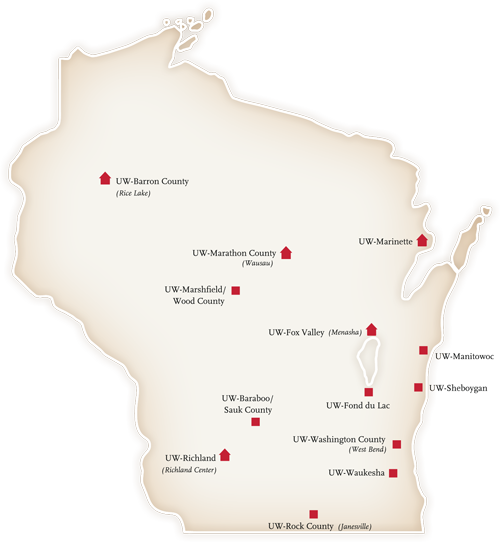
The UW Colleges is made up of 13 campuses, and we’re the 2-year college branch in the UW System tree. It would be lovely to see us mentioned in the local stories about President Obama’s call for making the first two years of college free. Here’s a story about how UW Madison researchers consulted with the president (which is great–Sara Goldrick-Rab does terrific work at the Wisconsin Hope Lab), but no mention that there are two-year colleges in the UW System.

The lack of mention is unfortunate. Tom Kleese, who used to be a terrific professor at UW-Richland before he turned his skills to helping students and parents navigate the college admissions process, had this to say:

“The UW Colleges are the perfect example of what this is for….I don’t know enough about funding or details, but I’m excited to see this on the table and hoping it sparks some productive discussion, not just positioning back and forth in the media, but actual dialogue about what we value as a citizens.” (You can learn more about Tom’s work online, at OnCampus College Planning.)

If we value student success, the UW Colleges should absolutely be part of the discussion. We have statistics that show students who start with us do better once they transfer than students who start at the four-year UW System institutions. And we’re the institution of access–our arms are open wide–so we are working with many students who are seriously under-prepared. They’re in the same class with valedictorians, which presents some teaching challenges.

In Wisconsin, valedictorians can go to any state school without paying tuition. One year my own campus, a very small campus indeed, had six valedictorians. We’re doing so many things right–here’s a recent article on how happy we are to be an international campus.

The tenure-track colleagues who’ve compiled the dossiers that absorb my time and attention for those 80 hours are all over Wisconsin at various of our two-year campuses. If you’re in Wisconsin, there’s one close to you. And if you’re lucky enough to be in class with my inspiring colleagues, you’re in very good hands.uwc-map

What’s more bizarre?

First post ever in a new category: what’s more bizarre?

Jimmy Fallon and Terry Crews Nip-Syncing?

OR

a parent calling an employer to protest a child’s performance review?

We don’t really have to decide between the two of course. We live in a weird world and both are real.

But only one makes me happy about how weird our world is.

How I Learned to Stop Worrying and Not-Hate Mother’s Day

Mother’s Day, Part 1: I Have Issues

“Rejoice with them that do rejoice, and weep
with them that weep” has been so hard for me
on Mother’s Day, just starting with myself
because I always felt both the yin and yang
of the day—deep gratitude for my amazing son
and mother and grandmother and so many others,
but not that by itself, because I also felt
trace elements of the grief from all the years
we were trying to get pregnant and could not.
Then so much hurt for the motherless, the ones
who never got pregnant who wanted to, the ones
who had mothers who hurt them or children who died.
And this word: miscarriage. Or this one: miscarriages.
And then so many who are childless by choice are told
so many times that choice is the one invalid one
of all our choices. And so I hated Mother’s Day
the first few years I was one and I still
would just as soon ignore it but I won’t.
_____

On Hating Mother’s Day (and other days)

I posted, on Facebook, for two or three years running, this diatribe against Mother’s Day by Anne Lamott. It always got such a strong response, positive and negative. The positive is relatively easy for me to understand and explain—there are a lot of us for whom Mother’s Day is not all sunshine brunch and flowers, for a lot of different reasons, and until Lamott’s piece, I don’t remember someone writing about “I hate Mother’s Day.”

In that, Mother’s Day is different from other holidays people tend to hate. Someone ambivalent about Christmas? Or angry about it? We might not agree, but we’ve seen repeated complaints about the commercialism of it, they way people who practice other faiths feel excluded, the way the war-on-Christmas-craziness asks us to pretend “happy holidays” is bad (when wishing someone a holy-day is pretty religious actually).

If someone were to write about being the adult child of an alcoholic and how Christmas was always tense when they were a child because maybe Dad would be drunk and abusive or maybe he’d just be gone, and either way, it was a relief when the day was over, we’d be sympathetic.

I think most of us are open to complaints about Christmas, even as we put up our tree and fa la la through the season.

Same with Valentine’s. If your romantic life is anything other than where you want it to be, this is probably not a great day, and we all get that.

Here are some holidays it would be harder to complain about and get general sympathy:

I imagine that if you’re a certain sort of conservative Christian who thinks demons are real, Halloween pretty much sucks. I also imagine that if you’re a pacifist, Veteran’s Day is difficult. Thanksgiving is all football and family and feasting, right? Unless you are a Native American. Or even if you’re just thinking about the way Native Americans might view the first Thanksgiving and what came pretty soon after.

In my experience Mother’s Day is more in this second group—just not something people are terribly open to hearing complaints about (especially from someone like me, with a living mother I adore, and a 9-year-old son who’s just awesome).

So that explains the positive responses—people who have ISSUES with Mother’s Day but have antipathy that dare not speak its name (a small version of saying “Voldemort” out loud).

And it explains some of the negative responses—people who just can’t imagine why someone could possibly hate such a lovely day that honors women who’ve blah blah blah.

The other negative responses have to do with the fact that Lamott is being pretty crabby and diatribey and not terribly logical (which she mostly never is, not terribly). My friend Jenny explains that well in her latest post.

She says Lamott’s  “vitriol is off-putting, and I disagree passionately with parts. By the end, I feel like I’ve been served what might have been a lovely soup were it not peppered with flies.”

Rejoicing With Them That Do Rejoice Or Not

“Rejoice with them that do rejoice, and weep with them that weep” is from Paul’s letter to the Romans. Ambivalent as I am about the man, I have to admit he just nailed it sometimes (am I remembering right that someone theorized he was short and ugly or did I just imagine that? I picture him that way, regardless).

Here’s why that verse is hard:

Times I’ve been unhappy with whatever portion of my life, I haven’t always done well rejoicing with those who were getting what I wanted but didn’t have.

And, I have to say, those who have so much aren’t always awesome about being sensitive to those who have less.

It’s not just a matter of holidays, either—it can be any random status update, or even that terrific practice of expressing gratitude regularly (some do it daily)—if someone’s expressing gratitude for something terrific, and I have something less than terrific, it’s hard not to snark inside my own head “well of course you’re grateful. I would be, too.”

I’m guilty of both sides of that—I don’t rejoice sometimes for those who are rejoicing.

And then sometimes when I’m rejoicing, I forget (entirely, utterly, blithely) to weep with those who weep. Or even that there are people weeping.

It’s something I’m trying to get better at, and I guess I’m writing this only to ask that we all remember both sides of Mother’s Day—that it’s wonderful and awful both.

Let’s weep with those who weep.

But also rejoice with those who rejoice.

(How can we do that all at once, every moment? I haven’t got a clue—for me it’s just the awareness and the attempt.)

_____

On Hating Mother’s Day Less

Meanwhile, I’ve realized that part of my own ISSUE with Mother’s Day stemmed from a long list of “shoulds.”

  • Since I struggled to get pregnant, but finally did, I should feel nothing but grateful on Mother’s Day.
  • Since my mother’s alive and wonderful, I should feel nothing but lucky on Mother’s Day.
  • Since my husband does laundry and dishes all the time, I should feel nothing but grateful on Mother’s Day.
  • Since my son routinely makes me laugh and smile, I should feel nothing but lucky on Mother’s Day.

Never mind that early May is always exhausting—the end of a semester, the end of an academic year.

Never mind that every role I love (mother, daughter, wife, sibling, aunt, cousin, gardener, professor, friend, writer, colleague, community member) is a role that also conflicts at least once every freaking day with every other role I love. Sometimes I feel like the guy in Too Many Hats when the monkeys start giving him shit.

I actually enjoyed Mother’s Day last year. As I remember, it was because I told people ahead of time precisely how I wanted to spend the day, and they let me do it the way I wanted, and I went into it with very low expectations—the first few years I think I wanted the day to look like a commercial put out by Hallmark if they sold both cards AND coffee—perky and happy and everyone smiling WHICH IS NOT EVER HOW THE DAY TURNED OUT.

(When my son was still in diapers, for example, he almost never wet through—I think we had to change sheets maybe twice his whole diaper-hood from a leaky diaper. But one of those times was EARLY Mother’s Day morning.)

So my plan is again to tell people precisely how I want to spend the day, and spend it that way, and acknowledge that I will likely feel lucky and grateful and exhausted and conflicted in varying measures and times through the day, the way I do most every day.

And I will be trying, on Mother’s Day and other days, to rejoice with them that do rejoice and weep with them that weep.

_____

Mother’s Day, Part 2: What I Want

To sleep a little later than I usually do.
To sit and watch my mother’s freckled hands
as they tremor just a little holding a cup
of coffee we’ve gone out for, just us two.
To snuggle with my son and watch TV.
To have someone else decide what we’re going to eat.
And then fix it or bring it or take me somewhere.
And then I want to go to bed and read.
And then I want the day to end. Amen.
 

_____

cropped-wr-tulip-gun-7509.jpg

It’s Hard to Teach When Gollum’s in Your Class

It’s hard to teach when Gollum’s in your class.
He’s not the ideal student by any stretch,
but he’ll blame you if he doesn’t pass.

He’s very disruptive, all that muttering “my precious”
and small group work with him is just a bitch.
It’s hard to teach when Gollum’s in your class

because even saying Sméagol when you take attendance,
even smiling when you really want to screech,
you can be sure that he’ll blame you if he doesn’t pass.

He misses class a lot. Just vanishes.
Then swears he was too there. It’s hard to teach
the earnest students when Gollum’s in your class,

but you owe it to the ones who are not treacherous,
the step by by step by steps, the clear approach.
That rat-like monkey will blame you if he doesn’t pass,

but don’t dumb things down. Just do your best.
Backwards design might save you in a hitch.
It’s hard to teach if Gollum’s in your class,
but don’t blame yourself if he shall not pass.


_____

If fish were learning outcomes, Gollum would get an A+.

If fish were learning outcomes, Gollum would get an A+.

_____
(photo by Larry and Linda on Flickr, Creative Commons)

(OH that last line–“He shall not pass” sounds so foreordained and the teacher in me keeps hoping, hoping that Gollum will pull it together and squeak out a decent grade. But how can I not play on “shall not pass?” Decisions, decisions…)

Pedagogy Stew: November 2013

Gracious but I was a pill sometimes.

He's better about watching the ball year by year. But sometimes the dirt is so interesting....

He’s better about watching the ball year by year. But sometimes the dirt is so interesting….

I watch my son’s squirrely-ness in the outfield in the context of how I played right field as a child. One time I got so bored, I just walked home.

Living kitty-cornered to the school came in handy. I’ve recently verified with grade school friends that yes, at least once, when I raised my hand to ask to go to the bathroom, I went home to use that bathroom. And watch a little TV.

“No one could find you,” my lifelong friend Cindy said.  “Finally someone called your house.”

“And I answered the phone?” Apparently I did, and then casually went back to school.

I don’t recall getting in trouble for that, and here’s probably why.  When I was in the sixth grade, I had spinal surgery, fusion for severe scoliosis. I wore a neck-to-hips cast for three months, then a slightly smaller cast for another three months, then what was called a Milwaukee brace for six months.

Overall, I was a very well-behaved child, and remember my glory moments of audacious youth fondly because they were few and far between. And because when I got caught, I didn’t get in trouble much.

Allowances were made.

Paul Tough’s terrific book, How Children Succeed, discusses a study and method of measuring childhood stress and trauma called ACE, for Adverse Childhood Experiences. The more adversity, the more likely a child is to struggle in school. One major factor that helps such a child thrive in spite of adversity (whether it’s violence or poverty, or, I would guess, major surgery), is good, solid, attachment parenting.  Which I got.

Thus my son’s traumatic trips to the emergency room because of severe food allergy reactions—we can buffer those experiences so he’s not doomed.

And when I’m volunteering at his school, and one of his classmates is just being a total pill, I have to acknowledge that I don’t know their home situation. I don’t know what they had to maneuver as they made it to bed the night before, or whether someone was there to feed them in the morning, or, even if they have all the material goods they could ever wish for, someone is consistently mean to them.

Viewing people with compassion—that really is what it’s all about.

I don’t do it perfectly, but it’s something I tend to do well as a professor.

I tell my students that our time together as members of the class is such a small fraction of our lives. If it’s all we know about each other, it’s really not much.

I picture them as icebergs, not because I’m a ship and they’re dangerous obstacles, but because I’m seeing just the tip of who they are and what they’re capable of.

I do try, year after year, to maintain appropriately high standards, but ultimately I’m  more interested in clarity of instruction and high levels of support.

In other words, I make allowances.

(This column originally appeared in Voice of the River Valley.)

Here he's 100% in the game.

Here he’s 100% in the game.

Pedagogy Stew: October 2013

Picture an eighth-grade boy in the late 1970s. Sort of a cross between Richie Cunningham and Shaun Cassidy. Watch him as he jams a little nubbin of a pencil so far into an electric pencil sharpener that it runs continuously, leaving the not-too-bright teacher to puzzle over the mystery of it all.

Don’t worry about that boy. He’ll grow up to be an aeronautics engineer.

The teacher? He’ll get fired. He had so little control in the classroom, we looked like one of those inspiring hero-teacher movies BEFORE the hero shows up.

That’s the closest I ever came to being homeschooled, when this teacher was in the process of being fired. My Dad was on the school board, and when the teacher accused me of crying to my parents about how mean he was (I complained, but I don’t remember crying), they pulled me out of school. But it wasn’t really homeschooling. I just sat in a lawn chair in the corner of my Grandma Roane’s lawn (which was kitty-cornered to the school) and waved at everyone when they were at recess. Soon enough a hunky-hero teacher showed up and I went back to school.

I was lucky enough to spend an evening with many of my eighth grade friends in early August this past summer, and it was terrific seeing all these folks again. What we went through in grade school bonds us in deep ways.

We caught up on all kinds of things. We agreed the hunky-hero teacher still looks pretty great, thirty-plus years on.

We chose to get together this summer.

But the time we spent together back then wasn’t out of choice. Not ours, and not our parents’.

We went to school where we went to school because there wasn’t an alternative.

Since most of us were from staunch Baptist or Methodist or Pentecostal families, the Catholic school in the next town would never have seemed like an alternative, though it occurs to me now that it was.

I don’t think any of us had ever heard of homeschooling.

Homeschooling is but one of many, many alternatives now. School choice in Wisconsin means my husband and I can send our son to any local elementary school, including our choice, the Studio School, which is a public school/charter school/school within a school. Next year, there may be a STEM school (focusing on Science, Technology, Engineering and Mathematics) in Arena we could send him to. School vouchers in Wisconsin mean we could send him to a private school and get some state money for it (wait—really? That can’t be right. Maybe I dreamed that).

Our two main criteria for deciding how to school our son are these: is he happy? Is he learning?

I’m glad to have alternatives. I’m glad we get to have criteria beyond “if the teacher is horrible, we’ll try to get him fired.”

But it’s not just nostalgia when I miss the simplicity of how I went to school.

(This column originally appeared in Voice of the River Valley.)

Pedagogy Stew: September 2013

My brain has a timekeeping section that operates like a not-very-creative grade school teacher’s bulletin board. There’s a snowflake for January and a heart for February and a kite for March. For September, of course, there’s a little red schoolhouse. Or perhaps a pencil, since almost no school looks like a little red schoolhouse any more.

I remember the one-room schoolhouse from my hometown primarily as a huge blaze—they burned it to give the volunteer fire department practice. No one had been a student there for more than thirty years. I started school in a red brick square that’s still being used as a school, but not for long. Taxpayers in my hometown passed a referendum to build a much bigger new school.

Back to school.

It’s an evocative phrase, isn’t it? See the bleary-eyed children—some of them not transitioning well at all from the summer sleeping schedule, some of them suffering so much from ragweed allergies they’re already longing for snow.  Listen to the bells and announcements and the roar of recess. Feel the amazing fast stops and starts and really particular squeaks of new gym shoes. Smell the glue. (Don’t tell me if you can taste the paste.)

O school supplies, how I love thee!

Even when we were homeschooling my son, we went out and bought school supplies at the end of summer. We accumulated such a stash, in fact, that I now scour the writing implement drawer for brand new pencils instead of buying them.

If you haven’t seen a school supply list for a while, they’ve changed some. For one, most schools (around here, anyway) put most supplies in big containers for everyone to use. When I buy a box of crayons, it’s not my son’s box to keep in his desk. The crayons get taken out of the box completely.

Each family is asked to contribute an absurdly high number of glue sticks. The burden of “who pays for this stuff” gets shifted more and more to families. I don’t look forward to the fees I’m hearing about from middle school and high school parents (of kids in public schools, mind you). Still, teachers end up buying a lot of supplies from their own pockets.

At the college level, at least on my campus, students are reminded to budget for their “printing account,” so they can print from campus printers during the semester. A lot of what we used to Xerox “for free” for students is now available online, and they have to print it themselves. It was never free, of course. It was paid for by departments out of “supplies and expenses” budgets that have shrunk in recent years.

Regardless of who pays for what, though, it’s the end of summer, the beginning of autumn, a time of harvest and bounty. The printing accounts are full, the pencils still have their original erasers, and there are reams upon reams of paper just waiting to see what our students have to say.

(This column appeared originally in Voice of the River Valley.)

Pedagogy Stew: August 2013

I’m headed to my 30th high school reunion this month, which causes me to reflect on many things, including my overwhelming urge to find a copy of The Preppy Handbook (pretty sure there were no Southern Illinois locations mentioned in it, also pretty sure I didn’t catch that it was satire when I got it for Christmas, circa 1981, along with some knock-off Topsiders and a belt with little ducks on it).

I was ranked 5th out of a graduating class of about 400. I remember that because I’d been tied for first until my junior year, when I flaked out and could muster only a B in Advanced Algebra/Trig, the same in Chemistry. This coincided with the onset of that whole “imagine this graph/molecule in 3-D inside your head,” which I pretty much totally sucked at.

But overall, those pretty-good-but-not-excellent marks were just further manifestation of my lifelong urge to avoid certain sorts of difficulty.  I’m drawn to some challenges, primarily those of my own devising. Stepping off the valedictorian track involved a rejection of mastering the challenges of classes someone else chose for me. I refused to take calculus my senior year, and as I remember it, my Dad called the man who would’ve taught it (who had taught algebra to my Dad at a local community college) and they grieved together.

I can’t help wondering what kind of challenge students anticipate when they sign up for a MOOC.

MOOC is short for Massively Open Online Course, and they’re all the rage in higher education. They are available online, usually for free, from some terrific universities and professors.

The good part is having free access to lectures, assignments, and tests from some superstar professors.

The bad part is, typically, having zero access to that professor, or to feedback that isn’t automated.

The good part is how easy it is to sign up and participate.

The bad part is the incredibly high dropout rate.

The good part is that a highly motivated student can learn a lot, for free.

The bad part is that a student who is motivated to avoid the challenge of sitting in a traditional college classroom, or taking what now seems like a “traditional” online college course…this student may not be up for the challenge of learning in a less structured, less obligation-driven environment.

In general, as a college student, I’d have crashed and burned in a MOOC, especially if I were taking it to speed through requirements I didn’t see the point of.

But what if taking a MOOC were my own idea? And not required?

It might be like my sophomore English class, at that point. I insisted on doing my book reports on the silliest books—a biography of Colonel Sanders and one I still remember the title of, Sherlock Bones—Pet Detective.  But I was reading Shakespeare’s Venus and Adonis and Kazantzakis’s The Last Temptation of Christ on my own. A challenge of my own devising.

(This column appeared originally in Voice of the River Valley.)