Category Archives: Teaching

Pedagogy Stew: March 2013

I’ve invented the most amazing computer game for my
composition students.

When I comment on their essays, which they’ve turned in online, I use “insert comment” to give feedback. There are pros and cons to this, of course, but one major PRO is that I’m now confident students can read my feedback. (I have handwriting issues. Lowest grade I ever got in my life? Penmanship. Fourth grade. At the time, I was sure Mrs. Cox had it in for me, but on reflection, I
think, no, that “C” was generous.)

Here’s the game: After I’ve finished grading the essays, their next assignment is a short exercise in which they should copy/paste one of the comments I’ve made, and then describe what
resource they looked to for help (online grammar site? our textbook? class notes?) and what
they plan to do to improve before the next essay.

All right, so…not so hot as a game.

It is, however, a fairly good test of their ability to navigate the online environment of digital essays and professorial feedback. Fairly often I have a non-traditional student who struggles online. (Drop-down list? Double-click? What’s that?) It’s not just non-traditional students. We think of Millennials (those born between 1980 and 2000) as being 100 percent wired, but I don’t
find them to be 100 percent proficient in computer usage that helps in the classroom. They can text,but word processing? Maybe not. They all use Google, but they may struggle when online research involves a database that uses Boolean logic or traditional Library of Congress Subject headings.

This round of essays, in each final draft, I am burying a link to an article in Nature
on the subject of “distributed thinking.” In “People Power: Networks of Human Minds Are Taking Citizen Science to a New Level,” Eric Hand describes how a group of scientists came up with Foldit, an online game in which “players compete, collaborate, develop strategies, accumulate game points and move to different playing levels, all while folding proteins.”
Computer models were thorough but slow—when gamers got involved, things went faster because, as Hand points out, “humans[are] blessed with a highly evolved talent for spatial manipulation, [and] can often see the solution intuitively.”

Beyond gamification (which means structuring learning, or anything else, like a game, with rewards—like giving chocolate for correct answers), what distributed thinking makes possible is
turning those skills our students use in gaming (and, um, some of us might possibly, occasionally, use in something girly and ridiculous like “Candy Crush,” a game that reports results on Facebook) into skills that could help solve real-world problems.

It isn’t just that I would like students to bring some of that persistence to their academic tasks. I would. But I would also love to figure out how to translate challenges (inside and outside academia) into the LANGUAGE and CULTURE of gaming, ina deep and serious way. Maybe then, when my son grows up, all his app-addled gaming hours will be a real asset.
______
6/15/13 NOTE: I ended up putting the link to the Nature article inside some Extra Credit directions–three students were very excited to find it. Next semester, I’ll think of more ways to make their hunting & clicking more rewarding.

I was talking about this to a student as we were searching EbscoHost (and online service with multiple databases to find articles) for sources for one of his papers, and told him I wished someone could structure searches like this as a game. He got it instantly: “Well, sure, like EbscoHost is a hallway, and….”

I can’t wait for the iOS version!
Creative People Say Yes (Sometimes)

I once came upon my cousin Reid practicing different ways to say “no.” He was 3 or 4 at the time. “No, I couldn’t possibly,” he said. “Absolutely not.”

He was onto something, that little ‘un. At least in my family, saying no takes practice.

Saying no? I’m big on it. Sometimes I’m even good at it. I certainly like the IDEA of saying no.

I’ve written about a fair number of times:
“How do I do that? How do I become the sort of person who says no to things?”

Clitter-Clatter Clutter Time , which references two terrific posts by my favorite tattooed Lutheran blogger, Nadia Bolz Weber, “The Spiritual Practice of Saying No,” and its companion piece, “The Spiritual Practice of Saying Yes!”

The Sarcastic Lutheran says, “The people who are inclined to say yes to everything do all the work and then burn out and become resentful about the people who are inclined to say no to everything. It’s as though the world is divided into martyrs and slackers.”

I don’t make a very good martyr or slacker, either one, not for very long.

I worked enough 50+ hours this spring semester, I worry my slacker credentials are in danger of not being renewed.

Busy as I’ve been, I’m nowhere close to martyrdom. I have some regrets, but I don’t regret all of the times I said yes. (Or came up with something to do that no one even asked me to do.)

Recent things that added to my to do list that I am particularly happy to locate in the land of “yes!”:

  • In addition to volunteering in my son’s classroom at the River Valley Elementary Studio School a couple hours a week, presenting a lesson on storytelling, with a way of talking about narrative arc that was a big hit.
  • Leading the Westby Co-Op Credit Union Board of Directors and branch managers in creativity exercises.
  • Serving as a (paid) reader for writing sample/placement tests for incoming UW-R students, and as a local developmental writing coordinator (unpaid).

In general, I am unrealistic about how the number of things I try to get done will fit into the number of available hours, and I don’t necessarily do things in the right order (which sometimes does and sometimes does not qualify as procrastination).

Thus, some of my commitments (such as returning student work promptly) suffered this spring, and probably, saying “yes” to new stuff impacted the ongoing stuff.

In general, I need to parse, pare, and prune my To Do list.

So, in one way, I totally get Kevin Ashton’s “Creative People Say No.”

He is right that “We do not have enough time as it is. There are groceries to buy, gas tanks to fill, families to love and day jobs to do.”

And he is right that “Time is the raw material of creation.”

Time is a precious resource. It must be guarded. I get it.

But wow did that blog post bug me.

(more on page 2!)

Something Beyond Cynicism

On the other side of burnout
there is rest, there is a place
where even my incompetence
has a bucket it fits into.

As I compost all my bitterness,
my misplaced hopefulness,
my misspent hours,
I watch the steam

rise up from what’s rotten.

A wisp of a moist gray ghost,
a sign of moving on,
a sweet portent

there and gone.

What’s done
is done.

Marnie’s Idea Mill–churning out great ideas since…NOW.

I am pleased, excited, terrified and astonished to be announcing the launch of Marnie’s Idea Mill, a crowdfunding campaign on Indiegogo.

I’m raising money to replace myself in the classroom, so that I will have time to design and implement workshops on creativity.

Thanks in advance for checking out the site and considering making a contribution!

You can help other ways–posting the link on your own Facebook page or blog, retweeting, or forwarding to people who might make a contribution will help, too.

I also welcome feedback on any and all parts of this project.

Also accepting good wishes and blessings!

Metaphor 1.1

Metaphor 1.1


_____
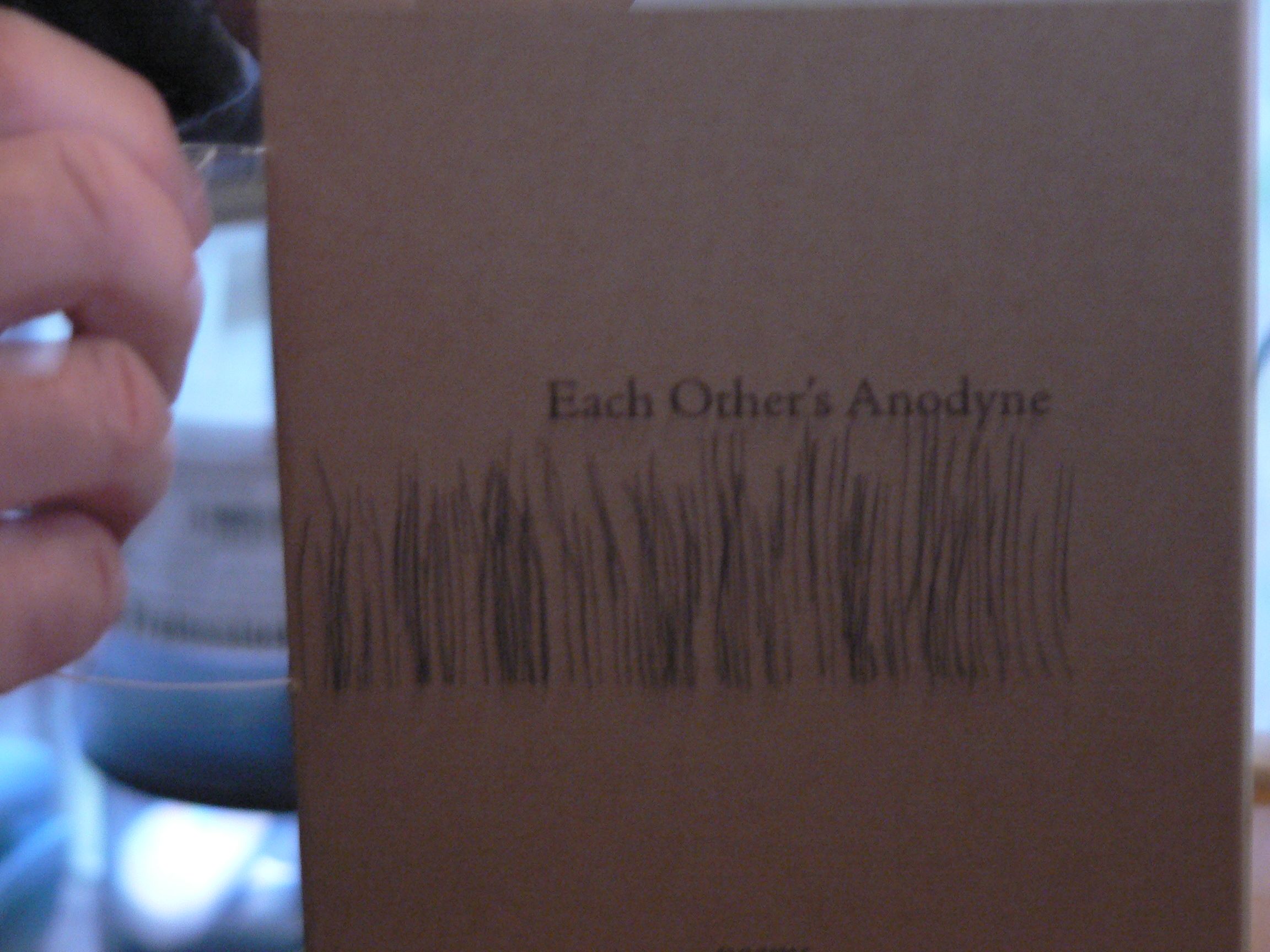
The perks I’m offering include a shout-out on this blog, a copy of Each Other’s Anodyne (a hand-sewn chapbook, a collection of my poems about teaching), feedback on your own creative writing, customized sonnets, and personalized creativity coaching sessions.

As of today, I’ve raised $10,000 in contributions and pledges toward the $24,000 total I need ($6,000 per course x four courses). My fundraising goal on Indiegogo is $4,000, and the deadline for the online campaign is June 17.

My ultimate deadline is July 1.

When I say I love impossible things, I am not kidding.

But I’m trusting Marnie’s Idea Mill can make some magic and attract some magic and make creativity workshops possible (which will then generate even more magic).
_____

Because I am married to a man who is 1/4 Finn, who has read the Kalevala multiple times and also cheers for Finnish drivers in World Rally racing, I know that the Sampo is a mill that generated an infinite supply of flour, salt, and gold.

It was made by Ilmarinen (using a forge, that, as my husband likes to point out, the Kalevala never mentions being destroyed–so maybe it’s still out there…) for the Mistress of the North, who turned out to be a nasty sort, and after a complicated series of events I couldn’t quite follow as my husband described it, the People of the South decided to steal the Sampo. The boat it was in sank, but pieces of the Sampo washed ashore and prosperity accompanied even those pieces.

There used to be a store in Madison called the Magic Mill, which I loved, but it closed. The Sampo, though–that’s a really potent metaphor.

The Sampo one of the images I had in mind when I decided to call my Indiegogo crowdfunding campaign “Marnie’s Idea Mill.”

Idea generation is a huge part of how we measure creativity, so I wanted a metaphor of something that generates. Mill seemed kindlier than factory somehow….

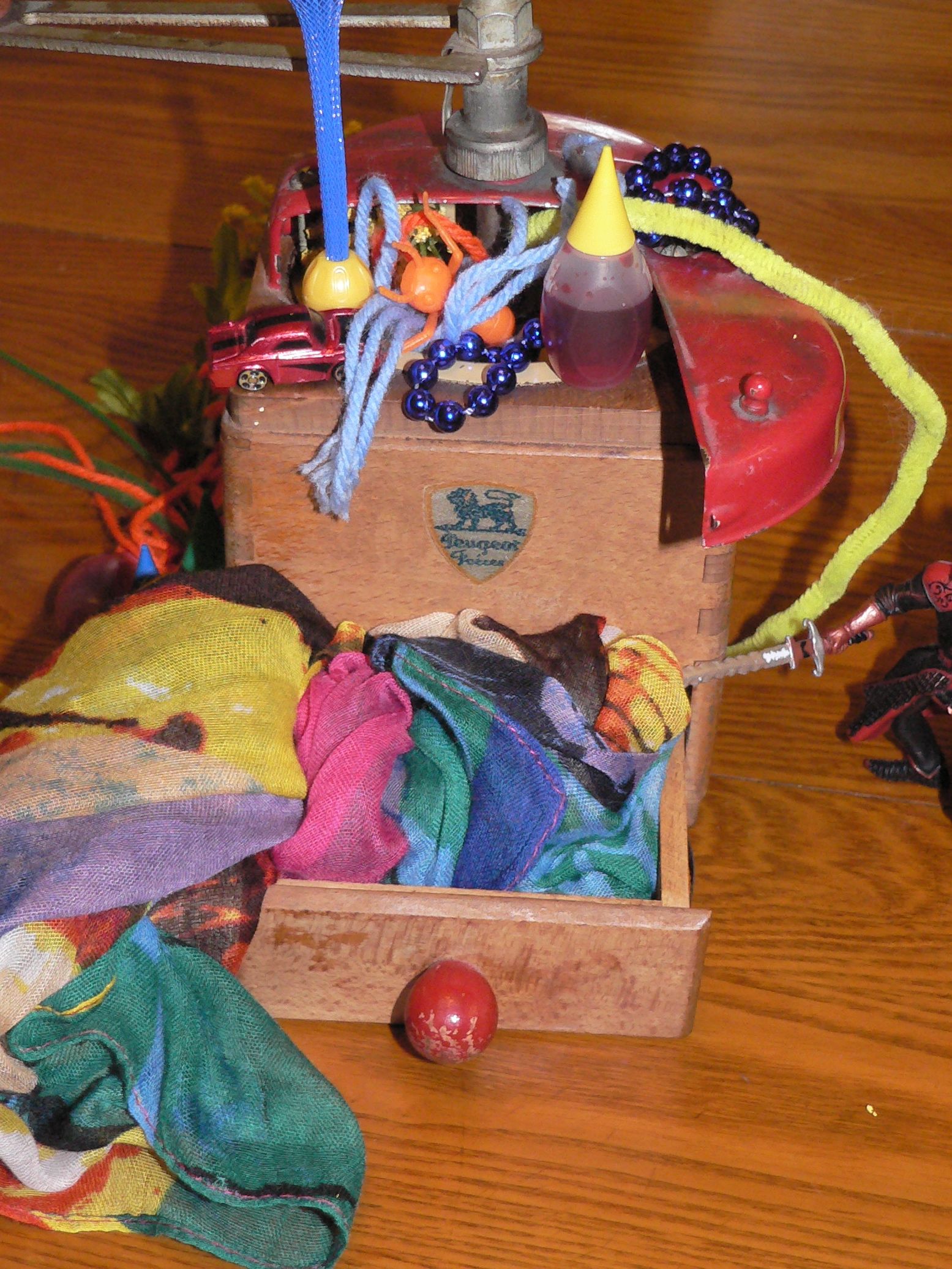
Plus, we have a wide assortment of Peugeot hand grinders (my husband is also 1/4 French).

Another old, old story I had in mind is from 1 Kings 17. In it, Elijah curses the land of Israel, “there shall not be dew nor rain these years, but according to my word.” The Lord sends him to a brook where ravens care for him, and then to a widow, who, when asked for a wee bit of bread by Elijah says, “As the Lord God liveth,” (which I think would now translate to “holy crap, man”). She says she barely has enough to keep herself and her son alive one more day. But Elijah blesses her barrel and says it will not be empty until God sends rain. (I always thought that should be until a few months after the rain showed up, but I’m sure it worked out fine.)

For me, this is a story about living from a place of “enough” rather than a place of “not enough.”

I am trusting there is enough good will and money in the world to help me meet my goal of designing workshops to help people become more creative–more people who can forge amazing mills, more prophets who can see plenty when the rest of us see scarcity….

More where there is currently less.
_____
(You can read more about my creativity research, my fundraising, and my ideas for workshops on various pages here on my blog.)

Teacher Lady! a new magazine for lady teachers!

I get my best ideas during finals week.

I get my best ideas during finals week.

When a Marriage Makes

When a marriage makes a baby,
no one is surprised.
When a marriage makes a mess,
well, likewise.

When a marriage makes a record,
it is some kind of sign.
When a marriage makes a book,
that book, that marriage–they’re mine.

____

nath doing the hand-sewing

nath doing the hand-sewing

old school

old school

This. Feels. Amazing.

This. Feels. Amazing.

_____
40 years ago, I put together a collection of some of my own poems along with outright thefty poems cobbled from Beatles lyrics & birthday cards. It was made of typing paper, bound with construction paper and yarn. This was in order to get out of trouble in 3rd grade (having been squirrelly in math class).

I still hope, eventually, to publish a collection of poems through conventional channels, but how lovely it is to have a husband who can take a manuscript of my poems related to teaching, and make of it…a book.

Prayer of Worry, Prayer of Love

On seeing pictures of bombing suspects, I thought
how very much they looked just like my students.
And now on hearing that “they’re not from here,”
I’m worried about my students, who are from everywhere.
I want to say my students, to the world, to God,
How much I love them. They’re why I do this job
(however well or badly I end up doing it).

I love all my students, damn it.
I love my Muslim students. Christians, also,
of course, and atheists, and everything else, too,
But today it’s Islam someone might be using
as an excuse to beat up a much-loved student.

We come to God so many different ways.
Or not at all. Let’s go where we find more love,
let’s offer hopes and wishes, good thoughts and prayers,
let’s be for each other what we all need more of.

The Constable Bob of the Classroom

I unlock the door to class then lock it back.
As we go in I say, “This is what I do
to protect you in the event of active shooter attack.”
Students laugh. It’s early. There are only a few,

so I go on to say, “Just so you know,
that’s pretty much it. I shut the door so
no one in the hallway can kill you fast.”
In my idea of myself, I could master

a sweet little Glock 40 and holster it
and pull it out when needed. “My aim is true,”
I’d sing in my head as I blew holes clean through
my targets. But oh, my students and I, we get

an image of things going badly with me armed.
I want to be Raylan Givens, that tough, that cool.
I’d be lucky to be Constable Bob. First do no harm?
Not with this clumsy, gun-totin’ prof in the room.

_____
(I would be BEYOND lucky to be Constable Bob. “Drewbacca” indeed. And also, p.s., I can’t even pretend to begin to imagine I could ever be as cool as Ava.)

Minnie the MOOC

Folks here’s a story ’bout Minnie the MOOC;
she was a red hot edu-kook.
She was the best-funded epic fail,
but Minnie had enrollment big as a whale.

Edu edu edu boo
P.d . P.d. PhD
hee hee hee hee hee hee hee
oh whoa whoa whoa

She messed around with a Superprofessor
She loved him though he was a great big messer.
He put her up online and showed her
how to spread the content around.

Edu-edu-edu-boo
oh-no-whoa-whoa
P.d. p.d. PhD
Oh-no-oh-no

She had a dream about real deep learning;
what she and her students were yearning.
Her institution gave her lots of press,
high hopes and her own web address.

Edu-edu-edu-edu-edu-edu-boo
p.d.p.d.p.d.p.d.PhD
Forgettabouta bookie-dookie oodles-n-oodles a links!
A-clickety clickety clickety hey!

He gave her citations with links for sources.
He gave her the goods from his most popular courses.
She had a million students every new semester
but 90 percent would eventually ditch her

Edu-edu-edu-boo
P.d.peeeeeeee.d.PhD
Hee hee hee hee hee hee hee

Poor MOOC, Poor MOOC, Poor MOOC

(With apologies to the songwriters of “Minnie the Moocher,” Irving Mills, Cab Calloway, Clarence Gaskill.)

_____
Here’s what the Digital Humanities are like for me so far:

When I started graduate school, I asked to be assigned in the smoker’s office.

“I didn’t know you smoked,” said the nice lady in charge of T.A. office assignments.

“I don’t,” I said.

But I wanted to be with the cool kids. All my friends, most of them anyway, were in the smoking office. Beckie (no longer smokes), Aron, Neil, Craig, and more whose names I’m blanking on.

This was in 1987, when smoking was allowed inside college offices. And classrooms–the first time I walked into Rodney Jones’s poetry workshop, I could barely see across the room, it was so smoky, and it took me a solid ten minutes to figure out who the teacher was, because there were three guys involved in an intense conversation, puffing away (none of whom looked like what I was used to professors looking like).

The smoking friends I now shared an office with were ones I’d met at the On-the-Island Pub, where I hung out and spent all the money I thought would last me a year after getting my bachelor’s degree. (It lasted almost six months, which actually, given my level of cluelessness and the fact that I didn’t have a credit card at the time, is pretty impressive.) So of course they all smoked.

I’m not saying that listening to all the cool kids talk about the Digital Humanities is putting me at risk for cancer.

I’m just saying that I’m not a full participant yet, just an observer.

Learning by osmosis.

So far, the cool kids seem to be saying MOOCs are

  • typically touted the most by people who understand them the least,
  • not actually good at what people want them to be good at,
  • potentially really exciting, if created by someone who understands pedagogy, cares about learning, and has experience teaching online.

Hence, I’m not willing to dismiss them as possibilities, but I’m awfully skepti-epti-epti-eptical.

I will, at some point, post something a little more substantive on this here topic. In the meantime, one of the non-smoking cool DH kids references the Hanson Bros.

Prayer for Midterm: Holy Saturday

I try to assure my son that Easter always comes
(he’s worried they’ll cancel it because of snow),
but honestly, I have my doubts this time.
There’s still so much iron-ice that just won’t go

away. So gray. The only bright spot is the rain.
Officially not winter. Officially no drought.
Still can’t lift my mood this Holy Saturday,
shivering in my little cave of time, bound

tight by my to do list, behind in everything.
So many of my students have the same
time-panic in their eyes. What we need
is grace and strength and energy, not time.

Just faith that we could ever get caught up
would feel like Easter. A miracle, momentum.

______

My son with a peace lantern. Because it was summer. And it's peace.

My son with a peace lantern. Because it was summer. And it’s peace.

(Image of my son taken by my husband, nath, who can be found online at Nightjar Records.)